
MindArt Programme: Modes of Delivery
The foundation of the MindArt offering for health professionals is the MindArt 8-session programme, which can be delivered once or twice a week. This has been adapted and clinically tested over many years to achieve optimal timing, contextual and relaxation-based scaffolding activities that complement the fail-safe sensorial material drawing processes designed to encourage focus and relaxation.
We have divided the MindArt Programme into two subscription packages: the MindArt Core Programme and the MindArt Professionals Complete Toolkit
MindArt Core Programme
Everything you need to run MindArt is ready and waiting for you.
The MindArt 8-week, 75-minute session guide walks you through the programme from start to finish, covering core principles, room setup, materials, session instructions, timing, and visual references for every stage. Nothing has been left to guesswork.
-
The MindArt 8-week, 75-minute session guide walks you through the programme from start to finish, covering core principles, room setup, materials, session instructions, timing, and visual references for every stage. Nothing has been left to guesswork.
Alongside the guide, you’ll have access to a full library of resources: templates, soundscapes, seated movement and relaxation videos, and visual aids. There is a facilitator film for each session offering practical tips for material preparation and delivery, drawn from real experience — the kind of insights that make a genuine difference in the room.
You’ll also have direct contact with our MindArt team to share experiences and get further guidance if needed.
When you’re ready to begin, simply prepare your space and materials as the guide describes, and start. You’re supported every step of the way.
MindArt Professionals Complete Toolkit
The full, integrated MindArt experience, combining hands-on material practice with digital tools that extend the benefit well beyond the session room.
Everything in the Core Programme is included. And then there’s more.
In the room and beyond it
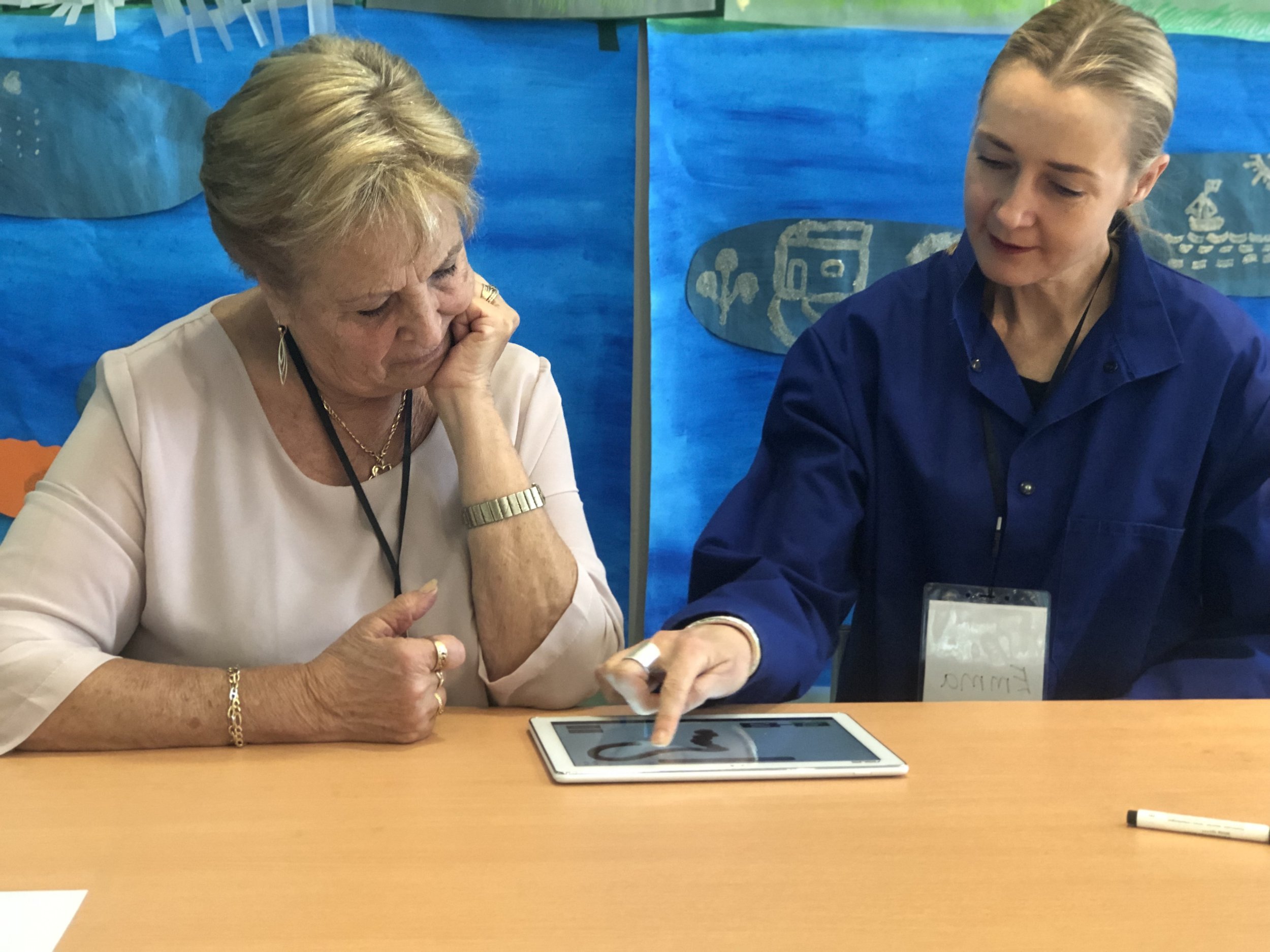
Each session in the 8-week guide is paired with a corresponding digital drawing experience, one of eight unique contexts, each with its own focus, style of meditative mark-making, and an original Taonga Pūoro soundscape.
-
In the room and beyond it
Each 1.5 hour session in the 8-week guide is paired with a corresponding digital drawing experience, one of eight unique contexts, each with its own focus, style of meditative mark-making, and an original Taonga Pūoro soundscape. The digital experience arrives towards the end of the session, after the hands-on drawing, and runs for around 10–15 minutes. It’s a gentle, supported introduction, participants exploring at their own pace with your quiet presence in the room.
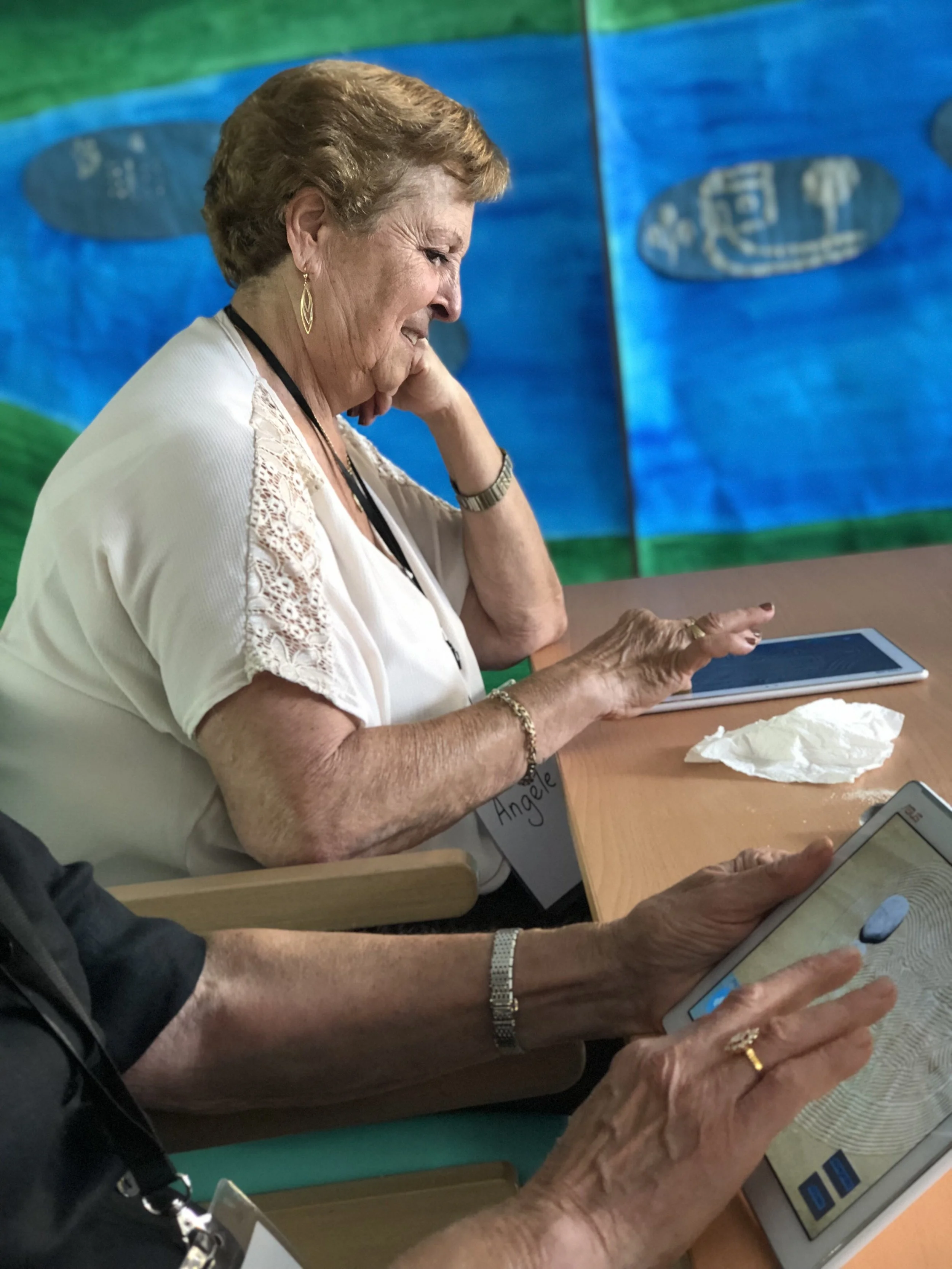
The toolkit includes access to the MindArt digital drawing application on 16 devices, such as tablets, computers, or phones for your participant group. But the session doesn’t end when people leave the room. Participants take the device home and can return to MindArt digital drawing whenever they choose, carrying the benefit of the session through the rest of their week, right up until you meet again.
Something to take home and return to
The toolkit also includes 30 MindArt Drawing Surfaces, printable pages inspired by nature and everyday textures, designed to sidestep the blank page entirely. Each surface is a quiet invitation: a starting point that sparks something rather than demands it. You print them on good quality A4 paper and hand them out to your participants to take home, working in whatever medium feels right to them.
Like the digital drawing, these pages travel with your participants, offering a way back into the MindArt experience at any point during the week.
Why both?
This combination grew directly from feedback during our clinical trials. Some participants felt most at home with the material, hands-on approach; others were drawn to the digital experience. Offering both means participants can engage with everything, or simply follow what feels right for them. There’s no right or wrong way in MindArt.
Do I Deliver the MindArt Programme
to One Group or Two?
-
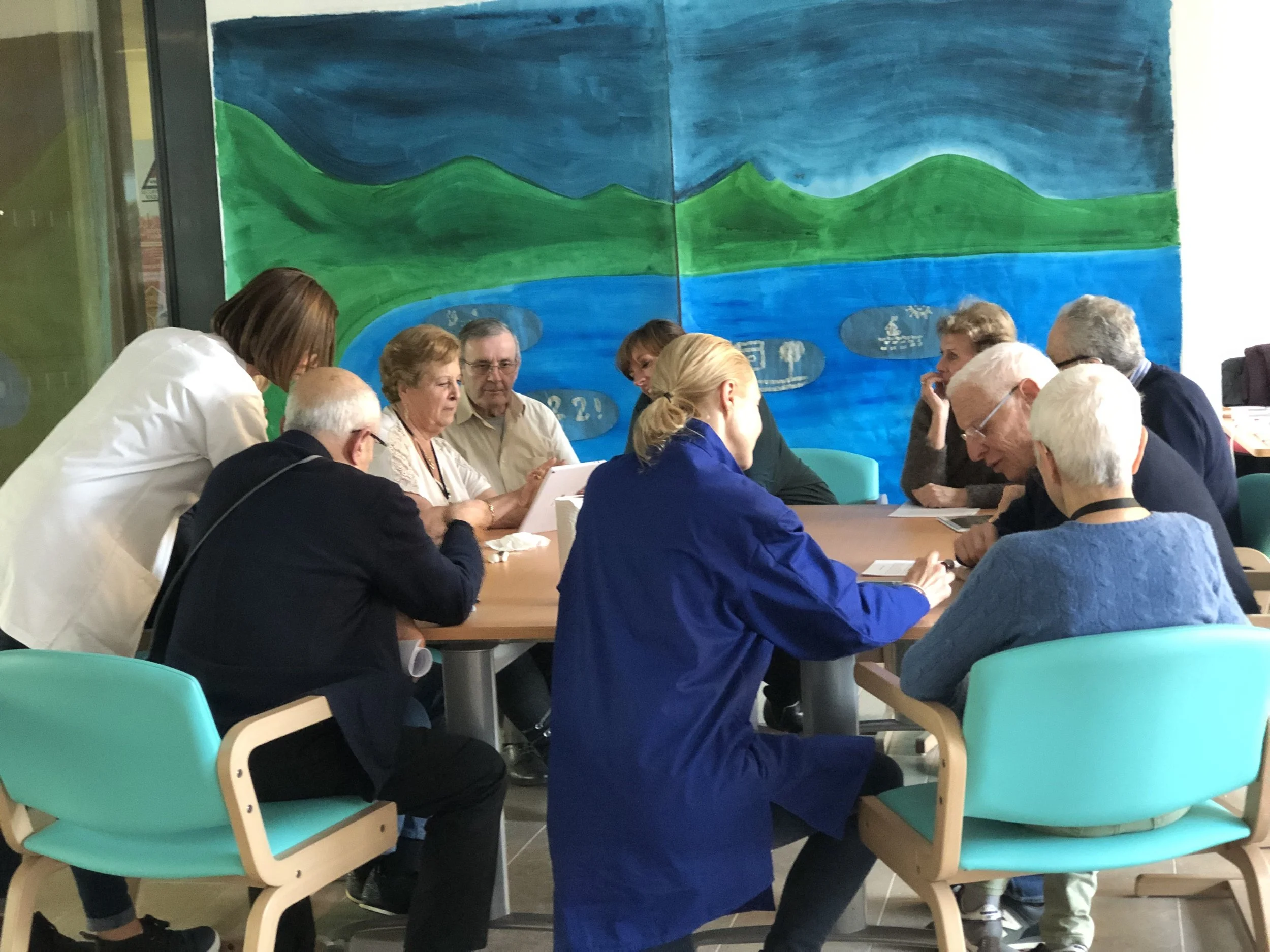
Each MindArt session divides participants into two groups in separate rooms: one for people living with neurological conditions and one for their supporters—whether family members, partners, friends, or professional caregivers. Though physically apart, both groups experience the exact same programme, benefiting from reduced stress and anxiety, enhanced focus through 'drawing as thinking', and leaving behind the weight of daily challenges.
When the session concludes, pairs reunite to share their creations and experiences. These moments of joy and revelation often spark discoveries: "I never knew you could do that/ thought like that!" Such exchanges foster pride, deeper understanding, and connection for everyone involved.
The benefits frequently extend well beyond the session itself. Participants continue conversations about their work on the journey home, enjoy lunch out together afterward (sessions typically run in the morning), or simply experience a more positive atmosphere at home. As one participant noted, they feel "relaxed for the rest of the day"—when both members of a pair feel better, daily challenges become easier to navigate together.
-
Yes, you can run a group exclusively for people living with neurological conditions or exclusively for supporters. The ideal group size is 8 participants, as this allows the facilitator and assistant to follow the group closely and provide individual support when needed, while maintaining the energy and benefits of a group activity. Participants benefit from watching others create, drawing inspiration from one another, and enjoying a social environment. Groups smaller than 4 people tend to lose this collective energy.
We don't recommend combining people living with neurological conditions and supporters in the same group and room, as this would diminish the benefit of having 'time for yourself' and the sense of independence that comes with it.
It’s important to remember that MindArt is designed for early to mid-stage neurological conditions. For more advanced stages, one-on-one interaction or smaller groups may be more appropriate. While minor adaptations for different abilities and conditions are welcomed, the MindArt programme’s structure is carefully designed so that activities build upon each other. Major modifications to this structure would compromise the programme’s integrity and mean it is no longer truly ‘MindArt’.
Flexible Delivery with MindArt Resources
It isn’t always possible to deliver the full MindArt Programme in hospital wards, during home visits, or in one-to-one appointments. That is why the MindArt Professionals Complete Toolkit is recommended for these settings. The toolkit’s full suite of Digital Drawing, Drawing Surfaces, Soundscapes, and Seated Movement and Relaxation Videos offers the flexibility to adapt to your participants’ needs and abilities quickly and in short sessions.
A key strength of the MindArt tools is that once introduced, participants can use them independently and without professional supervision. This makes it easy to extend MindArt beyond formal sessions into everyday settings such as waiting rooms, serviced apartments, and retirement villages.
If you are a larger organisation, please contact us directly to discuss further possibilities.